Feeling a wave of confusion when your phone flashes a liquid warning while being bone-dry is a uniquely modern tech frustration. One minute you’re about to plug in for the night, and the next, your daily driver is refusing to accept a charge, displaying a warning that seems to have appeared out of thin air. If you’re searching for answers to the perplexing liquid detected in lightning connector not wet dilemma, you’ve come to the right place.
This comprehensive guide will demystify the overly sensitive moisture detection system in your iPhone, walk you through proven, step-by-step methods to resolve the notification, and provide professional advice to keep your device in top shape. Whether you’re a casual user or a dedicated tech enthusiast, you will find actionable solutions and expert insights that go far beyond the basic troubleshooting you might see elsewhere.
Understanding the Liquid Detection Alert
Before panicking or rushing to a repair shop, it is crucial to understand what this warning actually means. Apple introduced a sophisticated liquid detection feature starting with the iPhone XS, iPhone XS Max, and iPhone XR—and it has remained a part of every model since. The system is not just a simple water sensor; it is an advanced safety mechanism designed to protect the delicate internal electronics inside your device.
The alert’s primary purpose is preventative. When the system detects conductive moisture bridging the pins inside the Lightning port, it immediately halts the flow of electricity. Think of it as a smart circuit breaker. If your iPhone were to charge while the connector is even slightly damp, the pins could begin to corrode, leading to permanent connectivity issues or an inability to charge at all in the future. The warning is your iPhone saying, “I am blocking the charge right now to prevent permanent damage later.”
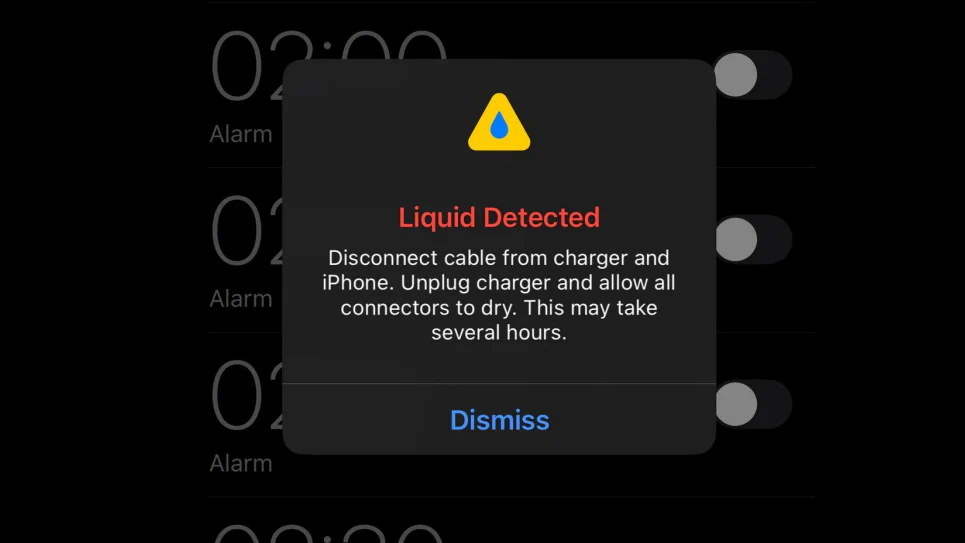
There are two main variations of this pop-up. You might see a message stating “Charging Not Available” when you plug in a charger, or simply “Liquid Detected in Lightning Connector” when connecting an accessory. In both instances, the underlying physics are the same: the system believes it has detected an electrically conductive path that shouldn’t be there.
Common Causes of a “Liquid Detected” Warning in a Dry Phone
The most baffling aspect of this issue is the warning when the phone hasn’t been anywhere near a sink, a pool, or rain. You could be sitting in a perfectly dry room, yet the message persists. Why does a liquid detected in lightning connector not wet scenario happen? Below are the most frequent culprits.
-
Condensation from Humidity: Sudden temperature changes can cause condensation to form inside the port, just like a cold drink sweating on a hot day. Moving from an air-conditioned car into humid outdoor air can be enough to trigger the sensor. The sensors are so finely tuned that they can detect even this microscopic layer of moisture.
-
Dust, Lint, and Debris: Your pocket is a magnet for tiny particles. When dust or pocket lint accumulates inside the Lightning port, it can trap ambient moisture or alter the electrical resistance between the pins. The sensor can mistake this conductive debris for actual liquid.
-
Corroded or Damaged Cables: Sometimes, the phone is perfectly fine, but the cable is the offender. If the pins on your Lightning cable are blackened, oxidized, or damaged, they can send false signals to the iPhone, mimicking the electrical signature of moisture. Using a cheap, non-MFi certified cable is a common source of this confusion.
-
Software Glitches or iOS Bugs: Rarely, a bug within the iOS software can cause the sensor to get stuck. This is more likely to happen if you are running a beta version of iOS, where system processes may not function entirely as intended. A simple restart often resolves these temporary logical errors.
-
Sensor Malfunction: In persistent cases, the physical humidity sensor inside the port may experience “zero drift,” causing it to trigger false positives even in bone-dry environments.
Step-by-Step Guide: How to Fix “Liquid Detected” When Dry
If you are facing a stubborn liquid detected in lightning connector not wet alert, follow this sequential troubleshooting guide. Patience is your most valuable tool here. Resist the urge to try aggressive methods, as rushing could cause hardware damage.
Step 1: Disconnect and Inspect Immediately
Unplug any cable from the iPhone. Do not just leave it dangling; remove the charger from the wall if necessary. Inspect the cable ends. Look for black spots or greenish discoloration on the metal pins. If you see corrosion, discard that cable immediately. It is the most likely suspect.
Step 2: The Gravity-Assisted Shake
Hold your iPhone securely with the Lightning port facing straight down. Gently tap the bottom of the phone against your palm a few times. This motion helps dislodge any microscopic droplets of condensation or loose debris hiding inside the port cavity.
Step 3: Dry Environment Wait Time
Place your iPhone in a dry room with good airflow. Avoid putting it in direct sunlight or on a radiator. A spot near a gentle fan or dehumidifier is ideal. Now, wait for at least 30 minutes. Do not test it every two minutes; plugging the cable in too early resets the drying sensor logic.
Step 4: Test with a New Cable
After the waiting period, plug your iPhone into a different charging cable. Ideally, use a brand-new Apple cable or a verified MFi-certified accessory. If the message disappears, you have identified the cable as the source of the problem.
Step 5: The Full Day Dry-Out
If the alert persists after using a different cable and waiting 30 minutes, the internal environment of the port is likely still triggering a false reading. You must commit to leaving the phone untouched in a dry room for up to 24 hours. Apple Support notes that it can take this long for all moisture traces between the microscopic pins to evaporate.
Troubleshooting Summary
| Problem | Likely Cause | Best Action |
|---|---|---|
| Alert appears only with a specific cable | Corroded or broken cable pins | Throw away the faulty cable and replace it. |
| Alert appears with all cables | Debris or condensation in the port | Perform the 24-hour dry-out method. |
| Phone is dry, but alert remains after 24 hours | Damaged sensor or internal corrosion | Professional cleaning or repair is likely required. |
Emergency Override: What It Is and When to Use It
Once the alert appears, the iPhone screen usually offers you a button labeled “Emergency Override.” This is a bypass feature. Pressing it forces the iPhone to ignore the safety block and begin charging regardless of what the sensor says.
When should you use it? Only in genuine emergencies. If your phone is at 2% battery, you are lost without GPS, and there is no wireless charger anywhere, the Emergency Override allows you to get the vital power you need to make a call or view a map.
Why should you avoid it otherwise? Because the risk of damage is high. Forcing electricity through a wet or contaminated port can cause electrolytic corrosion, which eats away at the metal contacts inside your phone. It can also lead to a short circuit that might fry the logic board, resulting in repair costs that rival the price of a new phone.
Common Mistakes: What Not to Do
When your iPhone rejects a charge, the instinct is to act fast. However, many well-intentioned “fixes” are actually dangerous. Here are the absolute “don’ts” according to repair experts and Apple guidelines.
-
Do Not Use a Hairdryer: Direct high heat can melt adhesives inside the phone that keep it water-resistant and damage the battery.
-
Do Not Insert Objects: Using a paperclip, toothpick, or cotton swab to “scrape” the port often pushes debris deeper or scratches the delicate pins. It is a surefire way to turn a software warning into a hardware repair.
-
Do Not Use Compressed Air: Air dusters are too powerful for the tiny Lightning port. They can force moisture past the internal seals or physically blow the internal ribbon cables loose.
-
Do Not Use Rice: This is the most common myth. Apple has officially warned against this practice. The fine rice dust can get inside the port and cause blockages, while the starches can act as an adhesive, making everything worse.
How to Prevent Future Liquid Detection Alerts
Prevention is always better than a cure. Once you have successfully cleared the warning and your phone is charging normally again, implementing a few simple habits can save you from encountering this stressful error in the future.
-
Use Port Covers: If you work in a dusty environment or live in a humid climate, invest in a set of magnetic dust plugs. These tiny inserts protect the Lightning port when you are not charging.
-
Keep Pocket Lint at Bay: Before plugging in, glance at the port. If you see lint, use a non-conductive nylon brush (specifically designed for electronics) to gently sweep it out.
-
Store Cables Properly: Tossing loose cables into the bottom of a bag allows dirt to embed into the connector heads. Keep cables coiled and capped.
-
Restart Weekly: A simple weekly restart of your iPhone clears out system caches that could interfere with peripheral sensors.
Leveraging iOS Updates for Stability
Sometimes, the liquid detected in lightning connector not wet error originates from a software conflict rather than a physical one. Apple frequently releases iOS updates that refine the logic of how system sensors interact with the operating system. If you have confirmed your phone is physically dry but the alert remains, navigating to Settings > General > Software Update and ensuring you are on the latest version of iOS can resolve background glitches that mimic moisture detection. If a major iOS update is available, install it; it might reset the faulty code segment triggering the warning.
When to Seek Professional Help
If you have followed the drying steps, swapped out your cables, and updated your software, yet the warning continues to appear for over two days, the damage might be physical. A technician can use a microscope to inspect the Lightning port assembly. They will look for corrosion on the logic board itself or damage to the sensor ribbon.
It is worth noting that Apple’s standard warranty does not cover liquid damage, as it is considered accidental damage. However, if you have AppleCare+, the repair cost will be significantly reduced (often just a service fee).
Frequently Asked Questions (FAQ)
Q: Can I use wireless charging when this alert appears?
A: Yes. The wireless charging system uses magnetic induction through the glass back, bypassing the Lightning port entirely. As long as the back of the phone is dry, you can place it on a Qi-certified charger to get power while the bottom port dries out naturally.
Q: Why does this keep happening every time it rains?
A: Even if you keep your phone dry, high atmospheric humidity changes the ambient conductivity inside the Lightning port. The alert is your phone reacting to the moisture content in the heavy air. A waterproof case helps reduce this exposure.
Q: Will a factory reset fix the false alert?
A: Only if the issue is a deep software corruption. However, this is rare. Before wiping your phone, try an “Erase All Content and Settings” only after backing up your data. In most cases, physical cleaning or a simple restart is the real solution.
Conclusion
Running into a liquid detected in lightning connector not wet scenario is undoubtedly frustrating, but it is rarely the end of the world for your device. It is a testament to Apple’s engineering—a feature designed to protect your expensive hardware from invisible threats.
To summarize the key takeaways: always start with patience. Disconnect the cable, tap the port downward, and allow 30 minutes to 24 hours of natural drying in a ventilated area. Avoid the rice myth and never use heat or sharp objects to “clean” the port. If you are stuck, wireless charging acts as a perfect lifeline, and the Emergency Override remains a last resort for true emergencies.
By understanding the science of condensation, acknowledging the role of debris, and maintaining best practices for cable storage, you can minimize these errors. Should the problem persist despite all efforts, trust a professional with a microscope rather than a home remedy with a hairdryer. Treat your charging port as the sensitive piece of machinery it is, and you will enjoy years of reliable charging without the ghost of “liquid detected” haunting your screen.
Related posts:
![facebook video downloader facebook video downloader]()
How to Change Name on Facebook: The Complete 2026 Guide
![Fix Orange Discoloration on MacBook Pro Screen]()
How to Fix Orange Discoloration on MacBook Pro Screen: Complete Guide to Causes & Solutions
![Google Gemini in 2026]()
What Is Everything You Need to Know About Google Gemini in 2026?
![fbi warns iphone android scams]()
Why the FBI Warns iPhone Android Scams Are Increasing
![What Should You Know About the iPhone 17 in 2026]()
What Should You Know About the iPhone 17 in 2026, Including Features, Specs, Price, Release Date, an...
![Best Free Password Managers ifixit]()
Best Free Password Managers: Secure Your Digital Life in 2026
![Snapchat Planets - ifixit]()
How Do Snapchat Planets Work and What Does Each Planet Mean in the Friend Solar System?
![What Causes Black Lines on Laptop Screen]()
What Causes Black Lines on Laptop Screen? A Complete Troubleshooting Guide