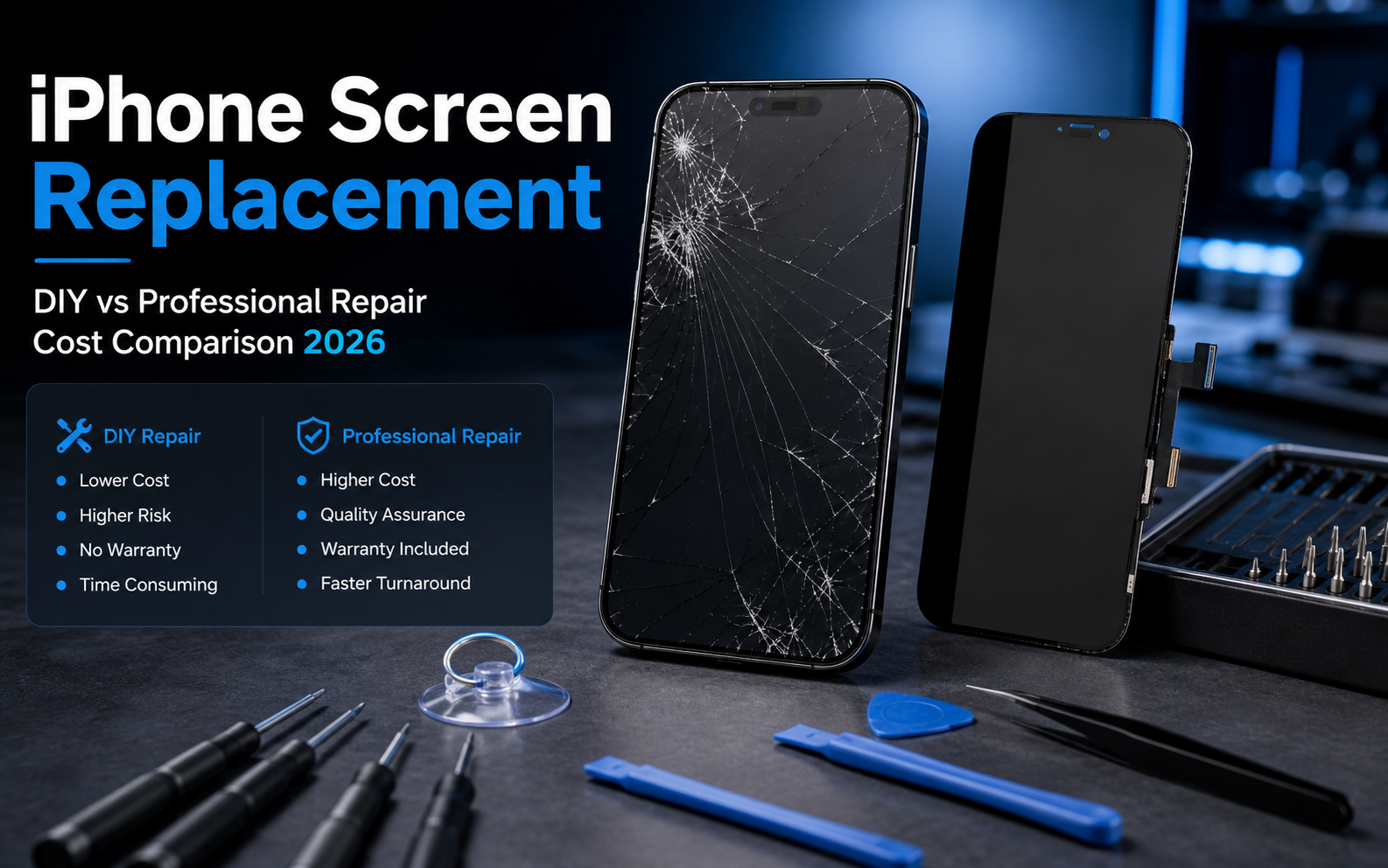
A cracked iPhone screen is one of the most common repair requests we see, and it’s also one of the most confusing decisions for phone owners. Do you order a $30 repair kit off Amazon and spend your Saturday afternoon with a heat gun, or do you pay a shop $150–$300 to have it done in an hour? Both paths get your screen fixed, but they come with very different trade-offs in cost, risk, and long-term reliability.
This guide breaks down exactly what each option involves so you can make the right call for your specific iPhone model and budget.
Why iPhone Screens Are So Expensive to Fix
Apple designs its screens as integrated units — the glass, OLED panel, and in newer models, the True Tone sensor and Face ID components are tightly linked. That’s why a screen replacement isn’t just “swap the glass.” On iPhone 12 and later, replacing the screen with a non-genuine part (or improperly calibrating a genuine one) can trigger a persistent “Unable to verify this iPhone has a genuine Apple display” warning, and can disable True Tone entirely unless the technician has the right calibration tools.
This complexity is the main reason professional repairs cost more than the parts themselves would suggest. Apple explains this calibration requirement directly on its official iPhone screen repair support page{:target=”_blank” rel=”nofollow noopener”}, which is worth reading before choosing a repair route.
Option 1: DIY iPhone Screen Repair
Typical cost: $25–$90 for the kit, depending on iPhone model and screen quality (aftermarket vs OEM-grade).
What’s included in most kits:
- Replacement LCD/OLED assembly
- Suction cup and pry tools
- Adhesive strips
- Screwdriver set (usually a Y-tip and Phillips)
Pros:
- Significantly cheaper upfront
- No waiting — you do it on your own schedule
- Good learning experience if you’re mechanically inclined
Cons:
- Risk of damaging the battery connector, taptic engine, or flex cables during opening
- Screen quality on cheap kits is often noticeably worse (dimmer, less accurate colors)
- No warranty if something goes wrong
- Face ID or True Tone may stop working without proper calibration
- Water resistance seal is broken and usually not properly restored
We generally recommend DIY only for older iPhone models (iPhone 8–11) where the repair is more forgiving, or for people who are already comfortable with basic electronics repair. If you’re attempting your first repair, our step-by-step phone repair tool kit guide walks through the tools you’ll actually need before you start.
Option 2: Professional iPhone Screen Repair
Typical cost by model (2026 average UK pricing):
| iPhone Model | Independent Repair Shop | Apple Authorized/Apple Store |
|---|---|---|
| iPhone SE / 8 | £50–£80 | £129–£149 |
| iPhone 11 / 12 | £80–£130 | £169–£229 |
| iPhone 13 / 14 | £110–£170 | £229–£279 |
| iPhone 15 / 16 | £140–£220 | £279–£329 |
Pros:
- Proper calibration keeps True Tone and Face ID working
- Water resistance can be restored with correct adhesive and seals
- Most reputable shops offer a 90-day to 12-month warranty
- Turnaround is usually 30–90 minutes
Cons:
- More expensive than DIY
- Quality varies significantly between independent shops — always check reviews first
If you’re unsure whether your local repair shop is reputable, checking recent reviews on Google or Trustpilot before booking is worth the five minutes it takes. Independent teardown analyses have generally found that recent iPhone models are somewhat easier to repair with standard tools than earlier generations, which has helped bring down independent repair costs over the past few years.
Cost Comparison at a Glance
- DIY kit: $25–$90 + your time (1–3 hours, higher risk)
- Independent repair shop: £50–£220 depending on model (30–90 minutes, moderate risk)
- Apple Authorized Service: £129–£329 (same day, lowest risk, best for AppleCare+ holders)
If you have AppleCare+, always use it first — screen repairs are typically £25–£30 with AppleCare+, which beats every other option on this list by a wide margin. You can check your coverage and exact pricing on Apple’s AppleCare+ coverage page{:target=”_blank” rel=”nofollow noopener”}.
Our Recommendation
For iPhone 12 and newer, we recommend professional repair unless you’re experienced with phone disassembly. The Face ID and True Tone calibration issues on DIY repairs are common enough that the savings often aren’t worth the hassle. For iPhone 8–11, a DIY kit from a reputable seller is a reasonable option if you’re comfortable with basic tools and want to save money.
Before deciding, it’s also worth reading our guide on repair vs replace decisions to check whether your phone’s age and condition still justify a screen repair at all, or whether the money is better spent toward a replacement device.
Frequently Asked Questions
Will a third-party screen affect my iPhone’s resale value? Yes, slightly. Buyers and trade-in programs often ask if the screen is original, and non-genuine screens can reduce trade-in offers by 10–20%.
Can I still get water resistance after a screen repair? Only if the technician uses fresh adhesive seals rated for your model. Ask specifically before booking — not all shops do this correctly.
How long does a professional screen replacement take? Most independent shops complete it in 30–60 minutes; Apple Stores typically take slightly longer due to diagnostic checks.
Is it worth repairing a screen on an iPhone older than 5 years? Usually only if the phone is otherwise in good condition and you plan to use it for at least another year — otherwise, compare the repair cost to a refurbished replacement.
For more detailed repair breakdowns by device, browse our full Phone Repair Guides category for step-by-step tutorials and cost comparisons across all major brands.