iPhone Screen Repair: DIY vs Professional — What Actually Costs Less in 2026
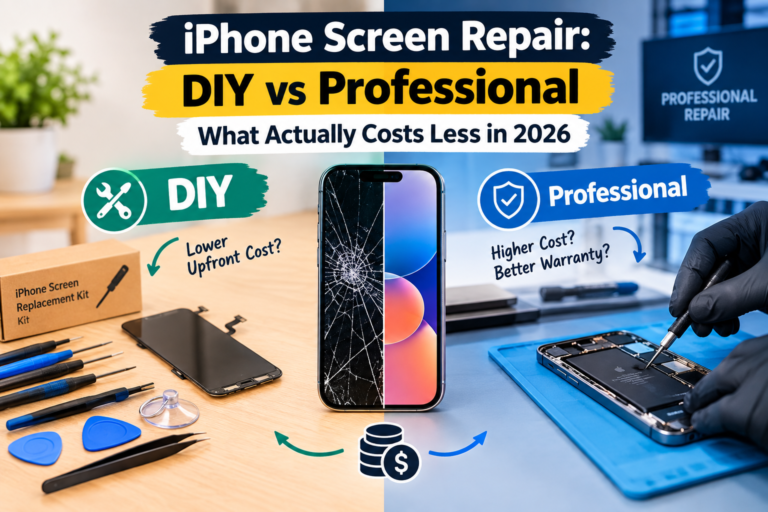
A cracked iPhone screen is one of the most common repairs out there, and it’s also the one most people are tempted to try themselves after watching a ten-minute video. The honest answer on whether that’s a good idea depends entirely on which iPhone you have and how much your time and a backup device are worth to you.
The Real Cost of a DIY Screen Repair Kit
Third-party screen replacement kits typically run £25-£60 depending on the model, and include the screen, adhesive, and basic tools. That sounds far cheaper than a professional quote until you factor in the realistic chance of a mistake on your first attempt — a damaged flex cable or a cracked replacement screen during installation turns a £40 kit into a total loss. Our own laptop and PC repair guides cover a similar principle: the cost of the parts is rarely the real cost of a DIY repair.
Where DIY Genuinely Makes Sense
Older iPhone models with simpler internal layouts, and screen replacements that don’t involve Face ID components, remain reasonably approachable for a careful first-timer with the right tools and a clean, static-free workspace. If you’ve done small electronics repairs before and have patience for a two-to-three hour first attempt, this category of repair is realistic.
Where DIY Gets Genuinely Risky
Newer iPhones with Face ID sensors, tightly integrated batteries, and water-resistance seals raise the stakes considerably. Damage the Face ID sensor cable during a DIY screen swap, and you’re looking at a repair bill that dwarfs what a professional screen replacement would have cost in the first place. This is the same reasoning behind our repair vs replace decision guide for laptops — the newer and more tightly integrated the device, the higher the cost of a mistake.
What Professional Repair Actually Includes
A reputable repair shop’s quote typically covers not just the part and labor, but a warranty on the repair itself — usually 90 days to a year — along with the shop absorbing the risk if something goes wrong mid-repair. That warranty is worth factoring into any price comparison, since a DIY repair carries zero recourse if it fails a week later.
Genuine vs Aftermarket Parts: The Detail Most People Skip
Whether you go DIY or professional, ask specifically whether the replacement screen is a genuine Apple part or a quality aftermarket one. Aftermarket screens have improved significantly, but color accuracy, touch sensitivity, and True Tone compatibility can vary noticeably between suppliers. Our phone repair guides break down which aftermarket suppliers we’ve found reliable for each iPhone generation, since this varies more by model than most guides mention.
Tools You’ll Actually Need If You Go the DIY Route
Beyond what comes in most kits, a proper suction cup, plastic prying tools rather than metal ones, and a heat gun or hairdryer to soften the original adhesive make a measurable difference in avoiding cracked components during disassembly. Skipping these in favor of whatever’s in a drawer is one of the most common ways a repair goes from straightforward to expensive halfway through.
Water Resistance: The Seal Most DIY Repairs Never Restore
Even a perfectly executed screen swap using genuine parts often doesn’t fully restore the factory water-resistance rating, because the adhesive seal is genuinely difficult to replicate outside a controlled repair environment. If water resistance matters to how you use your phone, that’s worth weighing into the DIY-versus-professional decision specifically, not just the visual and functional outcome of the repair.
A Simple Way to Decide
If your iPhone is more than three generations old, doesn’t have a working Face ID you rely on daily, and you’re comfortable losing the phone entirely if the repair goes wrong, DIY can genuinely save money. For anything newer, or if the phone is your only device, the warranty and expertise that comes with a professional repair is usually worth the price difference — especially once you account for the value of your own time.
Frequently Asked Questions
Will a DIY screen repair void my warranty?
If your iPhone is still under AppleCare or the original manufacturer warranty, opening it yourself typically voids that remaining coverage — worth factoring into the decision even if the repair itself goes perfectly.
How long does a professional screen repair usually take?
Most shops complete a standard screen replacement in under an hour for common models, though Face ID recalibration and quality checks can extend that somewhat for newer iPhones.
The Bottom Line
DIY screen repair isn’t inherently a bad idea, but it’s a decision that should be based on the specific phone model and your own risk tolerance, not just the upfront price of a repair kit. When the numbers are close, the warranty that comes with professional repair usually tips the balance.