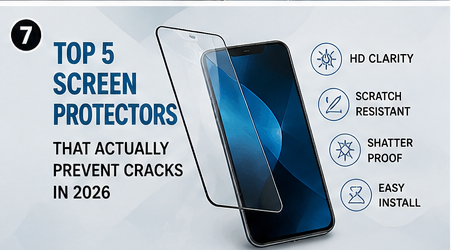
Most people assume any screen protector offers meaningful drop protection, but the reality is more nuanced. Some products are designed purely to prevent surface scratches and offer almost no impact absorption, while others are specifically engineered to flex and dissipate shock. This guide breaks down the material categories that matter and what to actually look for before buying.
The Material That Matters Most
Tempered glass (standard, 2.5D/3D curved edges) — the most common type, offering decent scratch and moderate impact protection. Quality varies significantly by glass hardness rating, usually listed as a number on the Mohs hardness scale{:target=”_blank” rel=”nofollow noopener”} (9H is common marketing shorthand, though real-world performance depends more on thickness and layering than this number alone).
Tempered glass with shock-absorbing layer — premium options add a thin polymer layer between the glass and screen, specifically designed to absorb impact energy rather than transferring it directly to the display. This is the category most associated with genuine drop protection, not just scratch resistance.
TPU/plastic film protectors — flexible and self-healing for minor scratches, but generally offer less impact protection than glass. Better suited for people prioritizing scratch resistance and screen feel over drop protection.
Hybrid case-integrated protection — some cases include a raised bezel or built-in screen lip designed to prevent the screen from directly contacting the ground during a drop, which can matter more than the protector material itself.
What Actually Determines Drop Protection
Independent drop testing from consumer research groups{:target=”_blank” rel=”nofollow noopener”} consistently shows that protector thickness and edge design matter more than brand marketing claims. A thicker glass protector (0.4mm+) with a slightly raised edge that contacts the ground first during a face-down drop performs meaningfully better than a thin, flush-mounted one, even if both claim “military-grade protection.”
Top 5 Types Worth Considering
- Case-friendly shock-layer tempered glass — Best for daily drop protection. Look for a stated shock-absorption layer explicitly, not just “tempered glass” in the listing.
- Full-coverage edge-to-edge glass — Important for phones with curved screen edges, where standard flat protectors leave the edges exposed and vulnerable.
- Privacy tempered glass — Same protection tier as standard tempered glass, with an added polarized filter that darkens the screen at side viewing angles. Worth it if privacy matters more than raw clarity.
- Anti-glare matte glass — Slightly reduces screen sharpness but performs similarly on impact protection to standard glass, while cutting down fingerprint smudging and glare in bright environments.
- Ultra-thin TPU film with a protective case combo — For people who dislike the feel of glass but still want drop insurance, pairing a flexible film with a case that has a raised screen lip offers a reasonable middle ground.
Installation Matters as Much as the Product
Even a high-quality protector fails to perform properly if installed with trapped air bubbles or dust particles underneath, which can create pressure points that crack more easily on impact. Using an installation kit with a dust-removal sticker and an alignment frame (included with most reputable brands) significantly reduces this risk compared to freehand application.
If your screen has already cracked despite protection, our guide on iPhone screen replacement DIY vs professional covers your repair options and realistic costs.
Price vs Protection: What’s Worth Paying For
Budget protectors (£5-10) generally use thinner glass with no shock layer, adequate for scratch prevention but limited drop protection. Mid-range options (£12-20) typically add the shock-absorbing layer and better edge coverage. Premium protectors (£20-35) often bundle installation tools, warranty replacement guarantees, and sometimes a manufacturer promise to cover screen repair costs if the phone cracks despite the protector — worth checking the fine print on these guarantees, as coverage terms vary widely.
Frequently Asked Questions
Do thicker screen protectors actually protect better? Generally yes, up to a point — very thick protectors can interfere with touch sensitivity or Face ID performance, so there’s a practical upper limit.
Is tempered glass better than plastic film for drop protection? Usually yes for impact resistance, though plastic film offers better scratch self-healing and a closer-to-native touch feel.
How often should I replace a screen protector? Most people replace glass protectors every 6-12 months as micro-scratches accumulate, or immediately if you notice a crack (even a small one, since it weakens the whole panel).
Can a screen protector fully prevent a cracked screen from a hard drop? No protector guarantees full protection against all drops — they reduce risk significantly but a hard enough impact, especially on a corner, can still crack the underlying screen.
For more buying guidance, check our full Buying Guides & Reviews category.