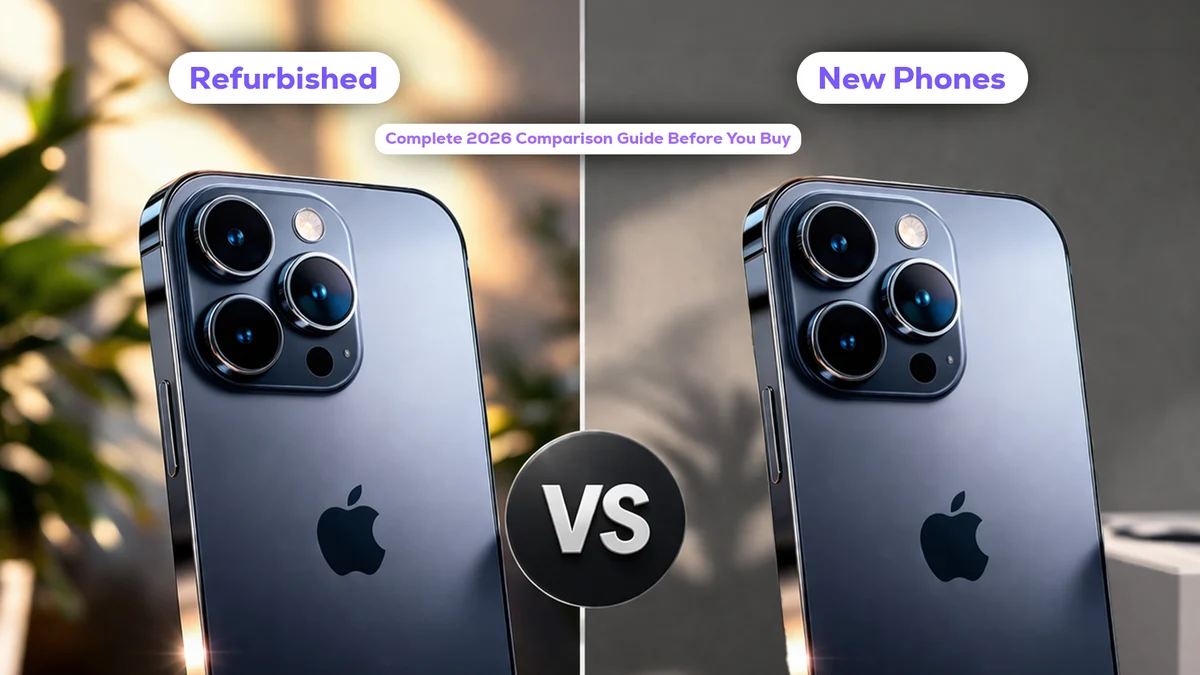
Refurbished iPhones have become a genuinely mainstream option, not just a budget compromise. With prices on new iPhones climbing every year, buying a properly refurbished model can save 30-50% while getting a device that’s been tested, repaired where needed, and often comes with a warranty. But “refurbished” covers a wide range of quality, and knowing what to check protects you from ending up with a phone that looks fine but has hidden issues.
What “Refurbished” Actually Means
Refurbished doesn’t mean used and resold as-is — that’s the “used” or “pre-owned” category. A genuinely refurbished iPhone has been inspected, had any faulty components replaced (commonly batteries and screens), fully reset, and tested against a checklist before resale. The quality of that process, however, varies enormously between sellers.
Apple Certified Refurbished{:target=”_blank” rel=”nofollow noopener”} — the gold standard. New battery, new outer shell in many cases, full 1-year warranty, same as buying new.
Carrier or retailer refurbished (major carriers, large retailers) — generally reliable, though battery health and cosmetic grading policies vary by seller.
Third-party marketplace refurbished — quality ranges from excellent to barely-functional. This is where careful research matters most.
What to Check Before Buying
Battery health. This is the single most important number to check. Ask the seller directly for the battery health percentage (visible in Settings > Battery > Battery Health on the device itself). Anything below 85% suggests the battery wasn’t replaced during refurbishment, even if everything else looks new.
IMEI and blacklist status. Before paying, run the IMEI number through a free IMEI checker{:target=”_blank” rel=”nofollow noopener”} to confirm the phone isn’t reported lost, stolen, or blacklisted by a carrier — a blacklisted phone can become unusable without warning.
Screen and body grading. Sellers typically use grading systems (like “Grade A,” “Excellent,” “Good”) to describe cosmetic condition. Ask for real photos of the actual unit if buying from a marketplace listing rather than stock photos.
Warranty length. Reputable refurbished sellers offer at least 90 days, often up to 1 year. Avoid listings with no warranty at all or vague “as-is” terms.
Face ID and Touch ID functionality. These can be affected if a screen was replaced improperly during refurbishment (a common issue on older models with unofficial parts). Test this in person if possible, or ask the seller to confirm before shipping.
Cost Comparison: Refurbished vs New
| Model | New Price (approx) | Refurbished Price (Grade A) | Typical Savings |
|---|---|---|---|
| iPhone 13 | Discontinued new | £280-350 | N/A |
| iPhone 14 | £550-600 | £380-450 | 25-30% |
| iPhone 15 | £700-750 | £480-550 | 25-30% |
| iPhone 16 | £850-900 | £600-680 | 25-30% |
Savings percentages tend to stay fairly consistent across generations, since refurbished pricing generally tracks a discount off the current new price rather than a fixed amount.
When Refurbished Makes the Most Sense
Refurbished is a strong choice if you want a recent-generation iPhone without paying full price, or if you’re comfortable with a phone that’s 1-2 generations behind the newest release. It’s less ideal if you specifically want the absolute latest camera or chip improvements, since refurbished stock naturally lags a generation or two behind current releases.
If your current phone just needs a repair rather than a full replacement, it’s worth comparing costs first using our guide on iPhone battery replacement vs new phone before deciding refurbished is the better route.
Red Flags to Avoid
- No stated battery health percentage
- Price significantly below typical market range for that grade (often signals a blacklisted or water-damaged unit)
- No return policy or an unusually short one (under 14 days)
- Seller unwilling to provide the actual IMEI before purchase
Frequently Asked Questions
Does a refurbished iPhone come with a new battery? Only if the seller explicitly states this, or if it’s Apple Certified Refurbished. Always check the battery health percentage rather than assuming.
Can I trade in a refurbished iPhone later? Yes, trade-in programs typically don’t distinguish between new and refurbished purchases, only the phone’s actual condition at trade-in time.
Is Apple Certified Refurbished always the best choice? It’s the safest option but not always available for every model, and pricing is often only slightly below new. Reputable third-party refurbishers can offer better value if properly vetted.
How long do refurbished iPhones typically last? The same as a new iPhone of that generation, assuming the battery and any replaced components were genuinely new — typically 4-6 years of solid daily use.
Browse more purchasing advice in our Buying Guides & Reviews category.